
CONFIDENCE BUILT IN
Backed by advanced modeling, full-scale testing, and decades of expertise to meet ASME and UK HSE requirements.


FORTRESS has long protected people and assets from outside threats. SAFE extends that mission to the other side of the wall: Containing and neutralizing hazards generated within a facility before they can reach personnel or assets.
SAFE™ enclosures are engineered containment solutions designed to manage hazards from the inside out: high-velocity projectiles, blast pressure waves, and energetic releases from testing operations, equipment failures, and explosive storage.
Our partners at BakerRisk, a leading industrial risk engineering consultancy, engineer the containment design. Our team turns vision into a FORTRESS and carries the project through fabrication and installation.
From compact tabletop enclosures to full high-bay testing facilities, we configure to your hazard profile, equipment, operations, and facility.
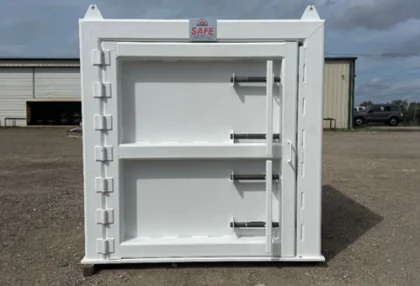
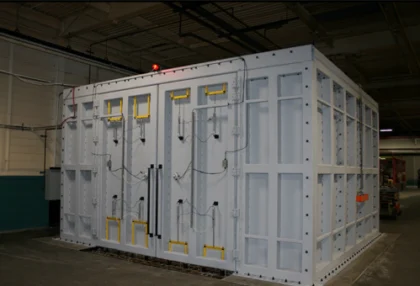
The SAFE Booth is a walk-in enclosure for aerospace, oil and gas, battery abuse testing, and other high-energy applications. Engineered around the hazard, it contains blast, projectiles, and, where needed, fire or toxic releases while allowing operators to safely set up and run tests.
Sizes:
Configurations:
Relevant specifications:
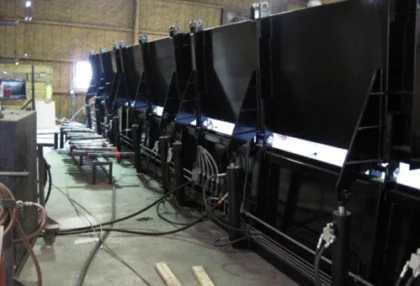
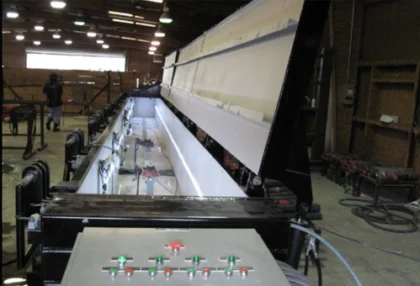
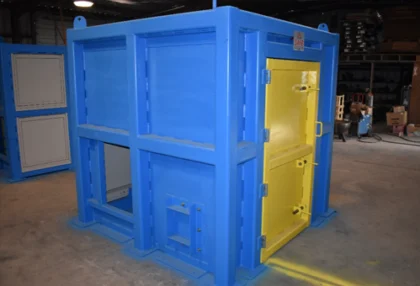
Built primarily for high-pressure oil and gas testing, the SAFE Bunker contains long tools, vessels, and equipment loaded from above. Its hinged lid keeps personnel outside during testing, while prefabricated construction allows above-ground installation without extensive excavation or foundation work.
Features:
Sizes:
Configurations:
Relevant specifications:
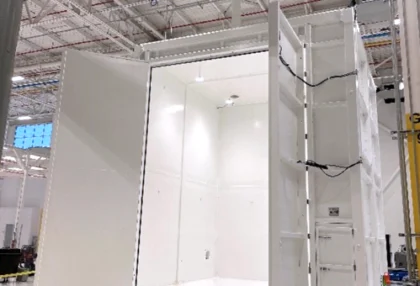
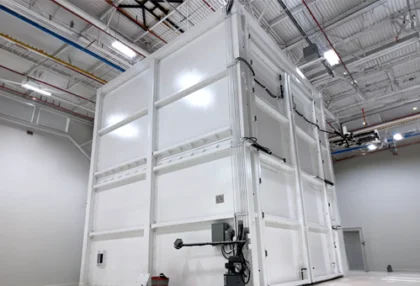
The SAFE High Bay brings Booth-style containment to oversized vessels, components, and test equipment. Built for greater height, wider access, and crane-assisted handling, it offers more flexibility and customization for large-scale testing environments.
Features:
Sizes:
Configurations:
Relevant specifications:
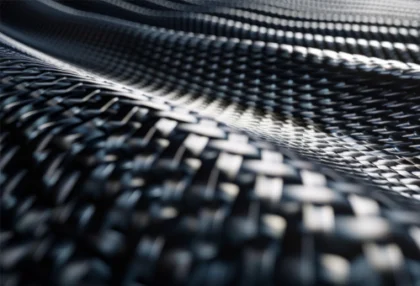
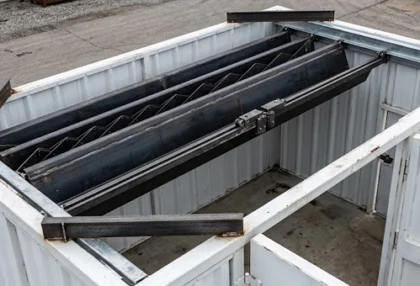
The SAFE Blanket provides localized containment when a fixed enclosure is impractical. Kevlar blankets with ballistic straps wrap pressurized or rotating equipment to contain hazards at the source, or can serve as retractable roofs for crane-access enclosures.
Features:
Sizes:
Configurations:
Relevant specifications:
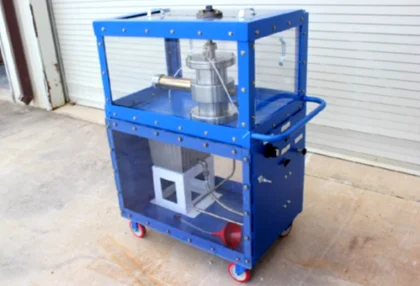
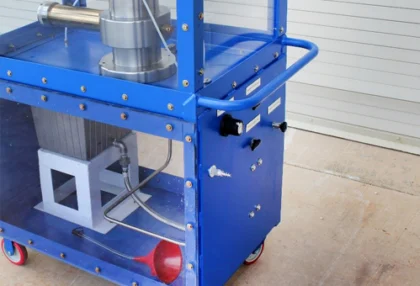
The SAFE Cart brings the same containment approach to smaller test items and lower-severity applications. Bench-mounted, table-mounted, or mobile, it provides compact pressure-test protection without the footprint of a full-size enclosure.
Features:
Sizes:
Configurations:
Relevant specifications:
The SAFE Booth is a walk-in enclosure for aerospace, oil and gas, battery abuse testing, and other high-energy applications. Engineered around the hazard, it contains blast, projectiles, and, where needed, fire or toxic releases while allowing operators to safely set up and run tests.
Sizes:
Configurations:
Relevant specifications:
Built primarily for high-pressure oil and gas testing, the SAFE Bunker contains long tools, vessels, and equipment loaded from above. Its hinged lid keeps personnel outside during testing, while prefabricated construction allows above-ground installation without extensive excavation or foundation work.
Features:
Sizes:
Configurations:
Relevant specifications:
The SAFE High Bay brings Booth-style containment to oversized vessels, components, and test equipment. Built for greater height, wider access, and crane-assisted handling, it offers more flexibility and customization for large-scale testing environments.
Features:
Sizes:
Configurations:
Relevant specifications:
The SAFE Blanket provides localized containment when a fixed enclosure is impractical. Kevlar blankets with ballistic straps wrap pressurized or rotating equipment to contain hazards at the source, or can serve as retractable roofs for crane-access enclosures.
Features:
Sizes:
Configurations:
Relevant specifications:
The SAFE Cart brings the same containment approach to smaller test items and lower-severity applications. Bench-mounted, table-mounted, or mobile, it provides compact pressure-test protection without the footprint of a full-size enclosure.
Features:
Sizes:
Configurations:
Relevant specifications:
Backed by advanced modeling, full-scale testing, and decades of expertise to meet ASME and UK HSE requirements.

One contract eliminates the design-bid gap, delivering roughly twice as fast as conventional stick build.

Prefabricated and fast-tracked to cut lead times, minimize disruption, and keep costs under control.
Engineered to satisfy applicable codes and regulations from day one.
SAFE protects people, equipment, and operations by containing failures before they become larger disruptions.
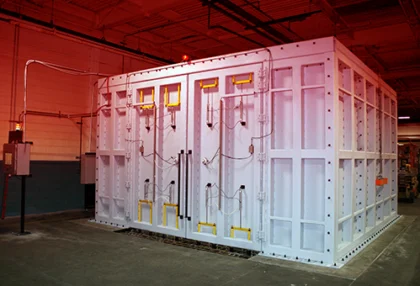
Oilfield services, hydrogen, and aerospace teams test vessels and equipment at pressures where open failure can mean blast and heavy projectiles. SAFE enclosures are engineered to contain both, backed by hundreds of BakerRisk pressure-failure tests.
Products:
Battery abuse testing brings a hazard profile the other applications do not: projectiles and blast, plus fire and toxic off-gassing. Automotive and EV manufacturers, battery energy storage system (BESS) developers, and their test labs use SAFE enclosures with intake dampers, vent panels, and roof-mounted HVAC scrubbers to contain an explosion and manage what comes off the cell afterward.
Products:
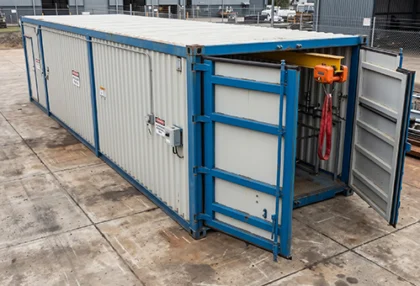
Turbines, fans, flywheels, and other high-speed rotating equipment throw fragments when they fail, and failures are rarely announced. Industrial manufacturers add containment around existing equipment, often after an incident, without taking the equipment out of service or rebuilding the surrounding space.
Products:
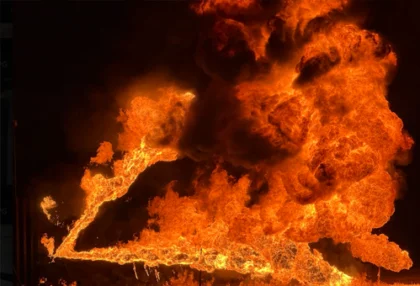
Military, explosive manufacturing, and mining operations can store explosives in light, inexpensive containers if they have the land to put distance between a magazine and an occupied building. Most sites do not. An engineered SAFE enclosure contains far more of the event, which is what makes short stand-off distances workable on a constrained site.
Products:
Oilfield services, hydrogen, and aerospace teams test vessels and equipment at pressures where open failure can mean blast and heavy projectiles. SAFE enclosures are engineered to contain both, backed by hundreds of BakerRisk pressure-failure tests.
Products:
Battery abuse testing brings a hazard profile the other applications do not: projectiles and blast, plus fire and toxic off-gassing. Automotive and EV manufacturers, battery energy storage system (BESS) developers, and their test labs use SAFE enclosures with intake dampers, vent panels, and roof-mounted HVAC scrubbers to contain an explosion and manage what comes off the cell afterward.
Products:
Turbines, fans, flywheels, and other high-speed rotating equipment throw fragments when they fail, and failures are rarely announced. Industrial manufacturers add containment around existing equipment, often after an incident, without taking the equipment out of service or rebuilding the surrounding space.
Products:
Military, explosive manufacturing, and mining operations can store explosives in light, inexpensive containers if they have the land to put distance between a magazine and an occupied building. Most sites do not. An engineered SAFE enclosure contains far more of the event, which is what makes short stand-off distances workable on a constrained site.
Products:
Every enclosure below was engineered for a specific hazard, prefabricated off-site, and installed with minimal interruption to an operating facility. Client names are withheld pending written permission.
Who: An aerospace operator pressure testing very large vessels. Why: Blast and projectile hazards required containment without disrupting testing. How: A 25-foot enclosure with a 17' x 22' double door, prefabricated in panels and assembled on-site. Result: Large-scale containment built around active operations.
Watch safety come to lifeWho: An aerospace operator conducting high-pressure gas testing. Why: Failures could release blast loads and projectiles weighing 100+ pounds. How: A 7-foot Booth contained both and connected to existing ventilation. Result: Installed in one day with minimal operational disruption.
Who: A manufacturer testing batteries for EV applications. Why: Testing could produce blast, fire, and toxic off-gassing. How: A Booth with intake dampers, vent panels, and a roof-mounted HVAC scrubber. Result: Prefabricated and installed in one day with minimal disruption.
What: Proof-of-concept testing of a horizontal SAFE Bunker. Test: 15,000+ psi hydrostatic pressure and a 100+ lb on-axis projectile. Result: The enclosure moved only inches and contained the hazards as designed.
Most projects run two to four months from design through installation. Larger High Bays run three to six. Because design and construction sit under one contract, there is no design-then-bid-then-build gap, which makes the process roughly twice as fast as conventional design and stick build.
Access and size. A Booth and a High Bay are walk-in: people open the door, go inside, and hook up the test. A Bunker opens from the top, the tool goes in, and people stay out. A High Bay is a Booth scaled up for equipment that arrives by crane.
No. Despite the name, it is prefabricated off-site and set in place in about a day. No digging, no foundations.
Primarily projectiles and blast. Battery abuse testing adds fire and toxic off-gassing, which is managed with vent panels, dampers, and scrubbers.
Enclosure designs satisfy ASME and UK HSE code requirements, and are backed by hundreds of tests simulating pressure-testing failures.
Portable configurations can be relocated for future needs. Bunkers are modular in 10-foot segments and can be extended as a program grows.
Ready to fortify your space with SAFE? Our team is dedicated to understanding your unique requirements and providing tailored solutions that ensure maximum protection and peace of mind.
Get in TouchIn high-hazard industrial environments, the safety of your personnel and the protection of critical assets are non-negotiable. With risks from explosions, fires, toxic gases, fragments and extreme weather, selecting the right protective building can make all the difference.
Download the Guide