

Why Protective Building Projects Fail Before Construction Starts
Why Protective Building Projects Fail Before Construction Starts
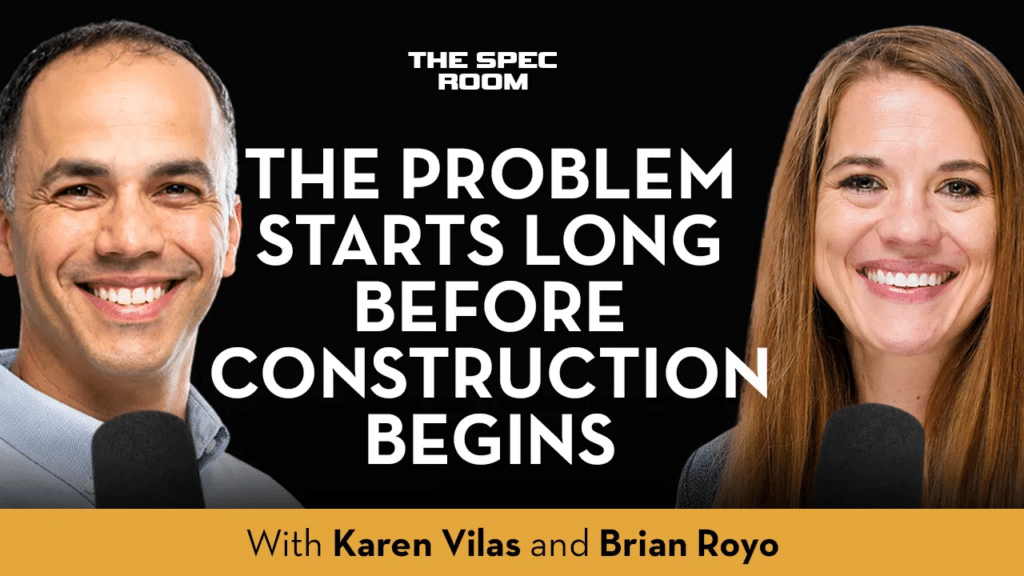
In the second episode of The Spec Room Podcast, co-hosts Karen Vilas, CEO of BakerRisk and FORTRESS Protective Buildings, and Brian Royo, President and Director of Operations at FORTRESS, dig into a hard truth. Most protective building failures aren’t construction failures at all. They’re communication failures that happen long before anyone breaks ground. Brian, whose background spans commercial, industrial, K-12, and nuclear construction, walks through what changed for him once he started working on buildings designed to protect human life, and why owners need to rethink how they assemble a project team from day one.
The Real Risk is the Silence Between Teams
Early in the episode, Brian claims that a lack of communication between stakeholders is the biggest project risk. Karen builds on that with a pattern she’s seen repeatedly at BakerRisk, where a process safety team hands off general protection criteria, only to discover later that the client’s design and contract were already moving forward without the right requirements built in. By the time anyone notices, a project can be well underway, built on the wrong foundation entirely.
One story from the episode captures why this happens. A client’s process safety group didn’t know who the procurement team was, and procurement didn’t know them either. Procurement was simply pricing a building off a spec sheet, aiming for the lowest cost option, with no visibility into the hazard data or the operational needs that should have shaped the requirements in the first place. Multiply that gap across process safety, procurement, operations, and construction, and it’s easy to see how a project can drift far from what it actually needs to be.
A Protective Building Looks Familiar, Until It Doesn’t
Brian makes an important distinction. From a construction standpoint, protective buildings use many of the same components as any other structure: similar wall assemblies, HVAC, and electrical systems. What’s different is the tolerance for error. In a typical commercial project, a misplaced wall might be an inconvenience the team lives with. In a protective building, that same mistake can put the structure’s blast performance at risk, and put someone’s life on the line. That zero-margin reality is what makes early alignment between technical and construction teams non-negotiable.
Learning to Ask the Uncomfortable Questions
Brian is candid that it took him more than a year at FORTRESS before he felt confident enough to push back on a spec that didn’t look right, even after two decades in construction. That’s a meaningful admission, and it points to a broader theme in the episode. Asking pointed questions is a skill you have to build deliberately, especially when a general contractor’s instinct is to price what’s on the page rather than question whether the page reflects the real hazard.
Karen reinforces this from the consulting side. She challenges anyone doing facility siting or risk assessment work to take real ownership of how that data gets translated into project requirements, rather than handing over a report and assuming the right details will make it downstream on their own. As she puts it, the responsibility doesn’t end when the analysis is finished. It ends when the right criteria actually reaches the people building the project.
When Hazards Change, So Should the Requirements
A particularly practical insight from the episode is the timeline problem. Protective building projects can take 18 months or longer from approval to construction, and the hazard analysis behind them may be a year or more old by the time ground actually breaks. Facilities change in that window.
Karen describes cases where a plot plan or an aerial image revealed that a site had expanded or shifted well beyond what the original hazard profile accounted for. This sometimes required the client to retrofit a building with tens of millions of dollars in additional protection because the original design no longer matched the real risk.
Building the Right Team
When assembling a protective building project team, Brian’s advice is to resist the temptation to consolidate work with whoever is already on-site. A maintenance contractor that handles pipefitting and HVAC at a facility isn’t automatically qualified to build a protective structure, even if some components look similar. Protective building work is its own specialty, and Brian argues owners get better outcomes when they hire partners whose primary expertise is protective buildings, not generalists working on an unfamiliar scope.
Karen adds a practical filter for owners evaluating bids. If a proposal comes back looking exactly like the RFQ, with no questions asked, that’s a warning sign. In one recent case, two contractors responded to a FORTRESS RFP with detailed questions and requests for information; a third didn’t ask anything and missed critical scope the other two caught. The contractors asking questions were the ones actually engaging with the project.
Collaboration Starts at Procurement
The episode closes on a point that ties the whole conversation together. If procurement operates as a pass-through, simply selecting the lowest bid that technically meets the spec, the people who will actually rely on that building never get what they need. Getting protective building projects right starts with building in room for questions, pushback, and scope refinement from the very first review, long before a single spec sheet goes out for bid.
Listen and Subscribe
If this conversation changed how you think about your next protective building project, that’s the whole point. Learn more at https://info.fortressprotectivebuildings.com/specroom, and follow The Spec Room Podcast for more conversations on bridging process safety, procurement, and construction.
Watch or listen: