

Compact Design
FORTRESS Flex offers a space-saving, compact design, ideal for limited spaces.


FORTRESS Flex provides the protection of FORTRESS MRB and FORTRESS Defender for residential and commercial applications. Its space-saving design and multi-hazard resistance make it a versatile choice for various applications.
FORTRESS Flex offers a space-saving, compact design, ideal for limited spaces.

FORTRESS Flex adapts the industrial FORTRESS products to meet residential and commercial building codes to provide unparalleled protection for your most important assets.

Provides protection against explosions, ballistics, fires, and extreme weather conditions, including storm debris and high winds.

Ensures low maintenance, durability and high durability.

FORTRESS flexes to your unique protective requirements.

Rigorous testing and adherence to high-quality standards guarantee reliability and effectiveness.
Residential
Emergency Response
Storm shelters
Safe rooms
Fallout shelters


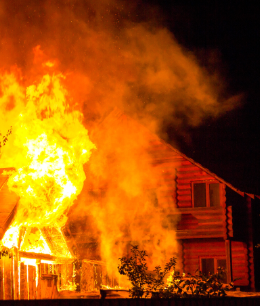

FORTRESS Flex is a compact, adaptable multi-hazard resistant protection solution designed for non-industrial applications, including residential, commercial, emergency response, government, and military use.
FORTRESS Flex brings the protection philosophy of FORTRESS MRB and FORTRESS Defender into smaller-scale applications where space, adaptability, and compliance with local building codes matter.
FORTRESS Flex can be used for applications such as storm shelters, safe rooms, fallout shelters, emergency response shelters, secure commercial spaces, and hardened protective rooms. The FORTRESS Flex product line also supports protecting what is outside the building from internal hazards – i.e., can be adapted to act as hazard containment structures.
Its compact design makes it especially useful when protection is needed in a limited space, while its reinforced concrete construction helps provide durability, low maintenance, and long-term protection.
FORTRESS Flex is designed to provide multi-hazard resistance against threats such as explosions, ballistics, fires, extreme weather, storm debris, and high winds.
This multi-hazard approach matters because real-world emergencies do not always involve just one threat. Hazards can connect and escalate, which is why FORTRESS recommends looking beyond single-hazard shelter design. The attached building guide also notes that focusing on only one hazard can leave a building vulnerable to other hazards.
A standard storm shelter is typically designed around one primary threat, such as tornadoes, high winds, or storm debris. FORTRESS Flex is different because it is designed as a multi-hazard resistant building.
That means Flex is built to address a broader range of risks, including extreme weather protection, fire, ballistics, blast-related threats, and other hazards depending on the application.
For additional storm shelter context, FEMA provides guidance on safe rooms for tornadoes and hurricanes.
A standard safe room may provide a protected space during a specific event, but not all safe rooms are designed for multi-hazard resistance. FORTRESS Flex is built around a more comprehensive protection philosophy.
It combines a compact layout, reinforced concrete construction, flexible use, and multi-hazard resistance for applications where occupants may need protection from more than one type of threat. For residential applications, connect this question to the residential protective buildings page.
Yes. FORTRESS Flex is designed for both industrial and non-industrial applications and can support residential protective building uses such as safe rooms, storm shelters, and fallout shelters.
For homeowners, the value of FORTRESS Flex is that it provides a compact protective space that can be adapted to residential needs while incorporating multi-hazard resistance. For homebuilders, FORTRESS Flex can be easily included in initial architectural and structural drawings to be an essential part of your home building process.
Yes. FORTRESS Flex can be used as a storm shelter, especially in areas where high winds, tornadoes, hurricanes, and storm debris are a concern.
Because Flex is designed for multi-hazard resistance, it goes beyond a single-purpose shelter by helping address several types of risks that may occur before, during, or after a severe weather event. For additional educational materials, visit extreme weather protection.
FORTRESS Flex may be used as a fallout shelter depending on the project requirements, configuration, and applicable code considerations.
Because every protective application is different, fallout shelter planning should be evaluated based on intended use, occupancy needs, location, duration of sheltering, ventilation requirements, and applicable design criteria and compliance.
No. FORTRESS Flex is designed for non-industrial applications that could include residential, commercial, municipal, emergency response, government, and military use cases.
Yes. FORTRESS Flex can be used in commercial settings where property owners, developers, businesses, schools, offices, or critical facilities need a compact protective space.
Commercial applications may include safe rooms, severe weather shelters, secure rooms, emergency preparedness spaces, or hardened areas for occupants or important assets.
Yes. FORTRESS Flex can support emergency response protective building applications where a compact, durable, protected space is needed.
Potential emergency response uses may include staging areas, protected command support, temporary sheltering, secure storage, or response support in areas affected by severe weather, infrastructure damage, fire, or other high-risk conditions.
Yes. FORTRESS Flex may be a good fit for government and military protective building applications that require compact, durable, hardened protection. Not only does the FORTRESS Flex protect from external hazards, but this flexible option is readily adaptable to be an protective enclosure for internal hazards.
Potential uses may include secure shelters, protective rooms, emergency readiness spaces, small operational support areas, guard support, or hardened spaces for personnel and sensitive assets.
Compact design matters because not every application has room for a large protective building. Residential properties, commercial spaces, municipalities, and emergency response teams may need protection in a smaller footprint.
FORTRESS Flex is designed to provide a space-saving option for limited spaces while still supporting multi-hazard resistance. This helps make FORTRESS multi-hazard resistant buildings more adaptable for non-industrial environments.
Reinforced concrete construction matters because it supports durability, strength, low maintenance, and long-term performance.
FORTRESS Flex uses reinforced concrete construction as part of its protection strategy. The broader FORTRESS product line is also built around reinforced concrete and multi-hazard resistant design, which helps differentiate FORTRESS from standard shelters, trailers, or single-hazard solutions.
Multi-hazard resistance means a building is designed to address more than one type of threat. Instead of focusing only on wind, blast, fire, or security, a multi-hazard resistant building considers multiple risks that may affect people, assets, and operations.
The protective building guide explains that buildings should be designed, engineered, and constructed based on the specific hazard profile, which may include blasts, fires, fragments, flammable or toxic gases, and extreme weather.
Multi-hazard protection is important outside of industrial settings because homes, commercial properties, emergency response operations, and public facilities can also face overlapping threats.
For example, severe weather can create high winds, flying debris, fire risk, infrastructure damage, power loss, and delayed emergency access. A single-purpose shelter may not address the full risk environment.
FORTRESS Defender is positioned as a portable or permanent multi-hazard resistant building often used when rapid deployment and temporary protected space are needed.
The FORTRESS Defender is engineered to specified standards and comes with proven protection having followed a very rigorous full scale testing program.
FORTRESS Flex is more focused on compact, adaptable protection to be tailored to specific use cases. It is better positioned for residential, commercial, emergency response, and specialized protective uses.
Yes. FORTRESS Flex is designed for flexible use and can be adapted to unique protective requirements.
Customization may depend on the site, intended use, occupancy needs, local code requirements, hazard concerns, and desired layout. This makes Flex especially relevant for applications where a standard off-the-shelf shelter may not fully meet the owner’s needs. For more information you can request a quote.
FORTRESS Flex may be a strong fit for homeowners, commercial property owners, municipalities, emergency response teams, government agencies, military users, and organizations that need compact multi-hazard protection.
It is especially relevant for buyers who are evaluating storm shelters, safe rooms, fallout shelters, hardened rooms, or compact protective buildings and want a solution designed around more than one type of hazard.
FORTRESS Flex is designed to adapt industrial FORTRESS products to meet residential and commercial building codes.
This is important because non-industrial applications often involve different permitting, code, placement, and occupancy requirements than industrial sites.
FORTRESS Flex may be a strong fit for homeowners, commercial property owners, municipalities, emergency response teams, government agencies, military users, and organizations that need compact multi-hazard protection.
It is especially relevant for buyers who are evaluating storm shelters, safe rooms, fallout shelters, hardened rooms, or compact protective buildings and want a solution designed around more than one type of hazard.
FORTRESS Flex is primarily positioned for non-industrial applications, so FORTRESS MRB or FORTRESS Defender may be the stronger fit for many oil and gas, power and low carbon, data and telecom, and heavy industrial applications.
However, Flex may still be relevant for smaller support spaces, non-process areas, administrative sites, perimeter facilities, emergency preparedness needs, or specialized compact protection requirements where local building codes and smaller footprints are important.
FORTRESS Flex may be the right fit if you need compact, durable, multi-hazard protection for a residential, commercial, emergency response, government, or military application.
The best fit depends on your intended use, site conditions, local building code requirements, space limitations, occupancy needs, and the hazards you want to address. The most important question to ask is whether the building has been evaluated for both what it needs to resist and where it will be placed. Request a quote for the FORTRESS Flex
Ready to fortify your space with FORTRESS multi-hazard resistant buildings? Our team is dedicated to understanding your unique requirements and providing tailored solutions that ensure maximum protection and peace of mind.
REQUEST A QUOTEIn high-hazard industrial environments, the safety of your personnel and the protection of critical assets are non-negotiable. With risks from explosions, fires, toxic gases, fragments and extreme weather, selecting the right protective building can make all the difference.
Download the Guide