
Blast Hazards
Explosions from industrial accidents, gas leaks or intentional acts threats can cause severe damage. Buildings must be designed to withstand overpressure and fragment impact to protect occupants and critical equipment.
Read More

Our modular buildings are engineered to meet the most demanding hazard resistance standards across industrial, defense, and residential environments. Whether protecting workers and equipment in high risk industrial zones or safeguarding families and communities in vulnerable areas, our engineers collaborate with you to design custom solutions. From explosions and fire to toxic gas and extreme weather, we build protective structures tailored to real world threats and where safety matters most.
Whether you need permanent infrastructure or a rapid deploy mobile shelter, FORTRESS solutions include full mechanical integration and compliance documentation that meet the most rigorous standards.
Hazard resistant buildings are designed to withstand a variety of challenges, each requiring tailored solutions to ensure comprehensive protection:
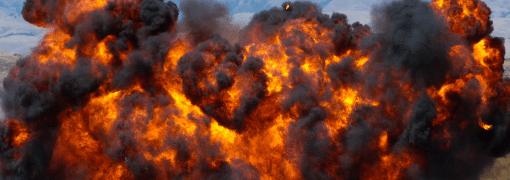
Explosions from industrial accidents, gas leaks or intentional acts threats can cause severe damage. Buildings must be designed to withstand overpressure and fragment impact to protect occupants and critical equipment.
Read More
Fires—whether from jet flames, pool fires or combustible materials—pose a major risk to personnel and infrastructure. Heat resistant materials and thermal insulation play a critical role in mitigating the effects of fire. Hazard resistant buildings often serve as a fire refuge, providing a safe and controlled space for occupants to shelter for like periods of time during fire related emergencies.
Read More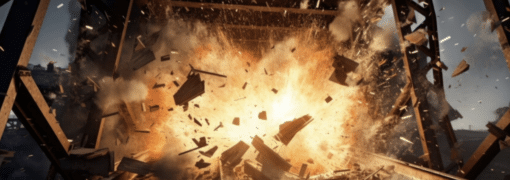
High velocity debris generated by explosions, intentional threats, or severe weather or structural failure can cause injuries and damage. Buildings must incorporate reinforced designs to minimize fragment impact and penetration on impact.
Read More
Industrial processes can release hazardous gases, creating risks of exposure and poisoning. Hazard resistant buildings include features like airtight seals and advanced ventilation systems to protect occupants.
Read More
Tornadoes, hurricanes and other severe weather events demand robust structural integrity. Hazard resistant buildings are engineered to withstand high winds, storm surges and flying debris.
Read More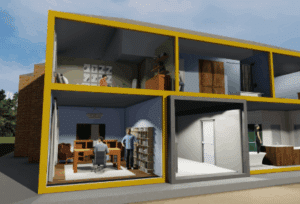 Thermal resistance is a cornerstone of hazard resistant building design, especially in fire prone environments. Unlike traditional materials, fire resistant building components—such as reinforced concrete and specialized doors—maintain their structural integrity under extreme heat. This ensures the safety of occupants and equipment during and after fire events. In hydrocarbon intensive industries, advanced fire resistant designs are critical to addressing rapid temperature rise inside the building.

Thermal resistance refers to a building’s ability to withstand and mitigate the impact of extreme heat, particularly in fire prone environments. It plays a critical role in maintaining structural integrity during high temperature events such as jet fires or pool fires. Materials with inherent fire protection, such as reinforced concrete and specialized insulation, are commonly used to enhance thermal resistance. These materials ensure that buildings remain safe and functional during and after fire incidents, minimizing risks to personnel and critical systems.

Toxic gas hazards can arise from industrial processes, chemical leaks or fire combustion. Exposure to gases such as hydrogen sulfide or ammonia poses significant health and safety risks. Hazard resistant buildings address these threats through airtight designs, advanced ventilation systems and safe zones equipped to filter and neutralize toxic substances. These measures protect occupants from inhalation risks and ensure safe evacuation during emergencies.
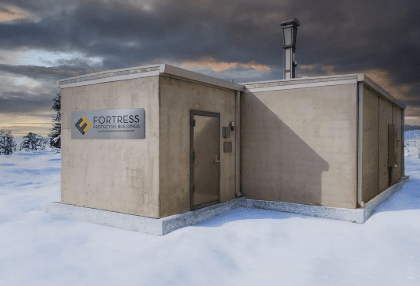
Concrete storm shelters are vital for protecting occupants during extreme weather events, such as tornadoes, hurricanes, and wildfires. These shelters leverage the inherent strength and durability of concrete to resist high winds and flying debris. Effective storm shelter designs adhere to industry standards, such as FEMA guidelines, ensuring adequate structural integrity and occupant survivability. Concrete’s fire resistant properties further enhance its suitability for multi hazard environments including those at high risk of wildfire exposure.

Protective or blast doors offer defense against blasts, fire and fragment penetration. Unlike standard doors, these specialized doors are designed to maintain integrity under extreme conditions, including hydrocarbon fires. Common applications include blast rated doors for industrial settings and multi hazard doors that combine fire resistance with air tight design. Proper selection and installation of protective doors are critical to ensuring comprehensive building safety and maintaining a secure fire refuge during emergencies.
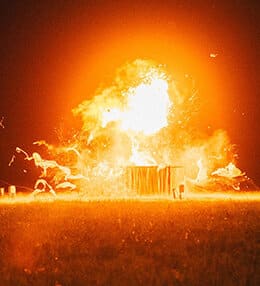
A BLEVE occurs when a vessel containing a pressurized liquid is exposed to intense heat, causing the liquid to rapidly expand and explode. Although considered a secondary hazard following a fire, a BLEVE can have catastrophic consequences, including widespread fragment throw, high overpressures, and fire escalation. Historical incidents, such as the underscore the devastating impact of BLEVEs. While these events are rare, hazard resistant buildings in high risk zones are often evaluated for their ability to withstand such scenarios.
Thermal resistance refers to a building’s ability to withstand and mitigate the impact of extreme heat, particularly in fire prone environments. It plays a critical role in maintaining structural integrity during high temperature events such as jet fires or pool fires. Materials with inherent fire protection, such as reinforced concrete and specialized insulation, are commonly used to enhance thermal resistance. These materials ensure that buildings remain safe and functional during and after fire incidents, minimizing risks to personnel and critical systems.
Toxic gas hazards can arise from industrial processes, chemical leaks or fire combustion. Exposure to gases such as hydrogen sulfide or ammonia poses significant health and safety risks. Hazard resistant buildings address these threats through airtight designs, advanced ventilation systems and safe zones equipped to filter and neutralize toxic substances. These measures protect occupants from inhalation risks and ensure safe evacuation during emergencies.
Concrete storm shelters are vital for protecting occupants during extreme weather events, such as tornadoes, hurricanes, and wildfires. These shelters leverage the inherent strength and durability of concrete to resist high winds and flying debris. Effective storm shelter designs adhere to industry standards, such as FEMA guidelines, ensuring adequate structural integrity and occupant survivability. Concrete’s fire resistant properties further enhance its suitability for multi hazard environments including those at high risk of wildfire exposure.
Protective or blast doors offer defense against blasts, fire and fragment penetration. Unlike standard doors, these specialized doors are designed to maintain integrity under extreme conditions, including hydrocarbon fires. Common applications include blast rated doors for industrial settings and multi hazard doors that combine fire resistance with air tight design. Proper selection and installation of protective doors are critical to ensuring comprehensive building safety and maintaining a secure fire refuge during emergencies.
A BLEVE occurs when a vessel containing a pressurized liquid is exposed to intense heat, causing the liquid to rapidly expand and explode. Although considered a secondary hazard following a fire, a BLEVE can have catastrophic consequences, including widespread fragment throw, high overpressures, and fire escalation. Historical incidents, such as the underscore the devastating impact of BLEVEs. While these events are rare, hazard resistant buildings in high risk zones are often evaluated for their ability to withstand such scenarios.
FORTRESS Protective Buildings specializes in designing and constructing multi hazard resistant structures that protect people and assets across various industries. Our patented, award winning designs provide comprehensive protection against multiple threats, including blasts, fires, fragments, toxic gases and extreme weather conditions. FORTRESS buildings are engineered to:
 FORTRESS offers a range of building products to accommodate permanent or temporary needs, including the FORTRESS MRB, FORTRESS Defender and FORTRESS Flex, each designed to meet specific protection requirements.
By integrating advanced materials and construction techniques, we ensure that our structures not only meet but set the bar for industry best practice, providing clients with peace of mind in high risk environments.
FORTRESS offers a diverse portfolio of hazard resistant building solutions, addressing industrial, commercial, residential and custom safety needs. From protecting people and critical industrial assets to safeguarding families in residential safe rooms, FORTRESS designs structures tailored for protection, durability, performance and multi-hazard resistance.


FORTRESS Concrete Storm Shelters are designed to safeguard occupants during extreme weather events, including hurricanes, tornadoes and wildfires.


FORTRESS Protective Doors are engineered to deliver advanced protection against hazards, offering standalone solutions for blast, fire, gas/smoke ingress and fragment resistance.
FORTRESS Concrete Storm Shelters are designed to safeguard occupants during extreme weather events, including hurricanes, tornadoes and wildfires.
FORTRESS Protective Doors are engineered to deliver advanced protection against hazards, offering standalone solutions for blast, fire, gas/smoke ingress and fragment resistance.
FORTRESS Protective Buildings are meticulously designed with advanced features to provide unparalleled protection and resilience in high risk environments. By combining innovative materials, cutting edge engineering and rigorous testing, FORTRESS ensures every structure meets the demands of multi hazard resistance.

FORTRESS buildings leverage concrete, which is naturally heat resistant, to withstand extreme temperatures caused by fires, including hydrocarbon jet and pool fires. Concrete material minimizes the risk of structural failure by maintaining integrity under prolonged exposure to heat, ensuring the safety of people and critical equipment.

FORTRESS Protective Buildings are designed with concrete’s inherent fire protection properties, it’s thermal mass, to ensure structural integrity during and after fire events. By minimizing the risk of failure under extreme heat, these structures safeguard people and equipment, doubling as a fire refuge in high risk environments. Fire rated walls and specialized fireproofing deliver reliable protection against rapid temperature escalation and prolonged exposure.

FORTRESS buildings are engineered to endure high overpressure from blasts, offering protection levels beyond 8 psi with minimal displacement or internal vulnerability. Reinforced concrete walls, blast doors and carefully designed response work together to shield occupants and equipment from explosion impacts and flying debris.

To address the risks of hazardous gas exposure, FORTRESS buildings incorporate airtight seals, advanced ventilation systems and dedicated shelter rooms. These features are designed to limit gas infiltration, maintain safe air quality and provide occupants with secure refuge areas during emergencies.
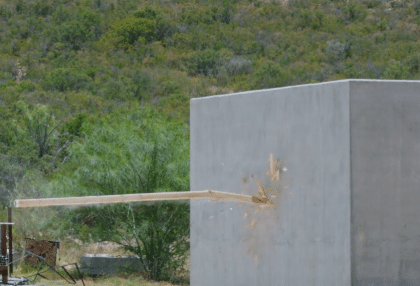
High velocity fragments generated by explosions or structural failures are a primary hazard in industrial settings. FORTRESS buildings integrate reinforced designs that prevent fragment penetration and are, capable of withstanding debris impact equivalent to 3/4″ steel fragments.
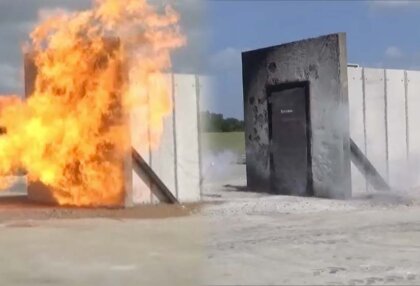
Every FORTRESS building undergoes rigorous testing to ensure reliability and performance in extreme conditions. From shock tube and vapor cloud explosion (VCE) testing for blast resistance to fire and fragment impact trials, each structure exceeds industry best practices. This commitment to testing ensures FORTRESS delivers dependable solutions that the bar for regulatory standards.
By integrating these features, FORTRESS provides comprehensive, multi hazard protection tailored to the unique needs of industries and environments where safety cannot be compromised.
FORTRESS buildings leverage concrete, which is naturally heat resistant, to withstand extreme temperatures caused by fires, including hydrocarbon jet and pool fires. Concrete material minimizes the risk of structural failure by maintaining integrity under prolonged exposure to heat, ensuring the safety of people and critical equipment.
FORTRESS Protective Buildings are designed with concrete’s inherent fire protection properties, it’s thermal mass, to ensure structural integrity during and after fire events. By minimizing the risk of failure under extreme heat, these structures safeguard people and equipment, doubling as a fire refuge in high risk environments. Fire rated walls and specialized fireproofing deliver reliable protection against rapid temperature escalation and prolonged exposure.
FORTRESS buildings are engineered to endure high overpressure from blasts, offering protection levels beyond 8 psi with minimal displacement or internal vulnerability. Reinforced concrete walls, blast doors and carefully designed response work together to shield occupants and equipment from explosion impacts and flying debris.
To address the risks of hazardous gas exposure, FORTRESS buildings incorporate airtight seals, advanced ventilation systems and dedicated shelter rooms. These features are designed to limit gas infiltration, maintain safe air quality and provide occupants with secure refuge areas during emergencies.
High velocity fragments generated by explosions or structural failures are a primary hazard in industrial settings. FORTRESS buildings integrate reinforced designs that prevent fragment penetration and are, capable of withstanding debris impact equivalent to 3/4″ steel fragments.
Every FORTRESS building undergoes rigorous testing to ensure reliability and performance in extreme conditions. From shock tube and vapor cloud explosion (VCE) testing for blast resistance to fire and fragment impact trials, each structure exceeds industry best practices. This commitment to testing ensures FORTRESS delivers dependable solutions that the bar for regulatory standards.
By integrating these features, FORTRESS provides comprehensive, multi hazard protection tailored to the unique needs of industries and environments where safety cannot be compromised.
FORTRESS Protective Buildings leads the industry with advanced technologies and innovative approaches that redefine safety and resilience in high-risk environments. Our commitment to pioneering solutions ensures that every building provides unmatched protection and operational efficiency.
FORTRESS buildings utilize materials such as reinforced concrete and blast-rated components to address extreme hazards. These materials are chosen for their proven ability to maintain structural integrity under intense conditions. This focus on durability and reliability ensures long-term performance in challenging environments.
FORTRESS combines the adaptability of modular construction with the enduring strength of permanent structures. Modular designs allow for rapid deployment and customization, while permanent construction ensures resilience and minimal maintenance. This dual approach meets operational demands without sacrificing safety or quality.
FORTRESS buildings incorporate a range of safety features designed to address specific hazards, tailored to meet the unique requirements of each project:
FORTRESS takes a comprehensive approach to hazard resistance, ensuring its buildings perform under complex conditions:
Through continuous innovation and attention to client needs, FORTRESS delivers solutions that exceed expectations and provide peace of mind in the most demanding environments.
A hazard resistant building is a specialized structure designed by licensed, Professional Engineers to protect people, equipment and operations from extreme hazards such as blasts, fire, toxic gas, fragments and severe weather. These buildings are engineered using advanced materials and designs to ensure resilience in high risk environments.
FORTRESS Protective Buildings are designed to resist multiple hazards, including:
FORTRESS buildings deliver unmatched multi hazard protection, combining modular adaptability with the durability of permanent structures. Rigorously tested and proven, they exceed industry best practices and can be tailored to meet site specific hazards and operational requirements.
FORTRESS buildings offer the best of both worlds. They are permanent buildings of modular construction, designed for rapid deployment, easy relocation and scalable use. This combination delivers long term resilience and performance while maintaining the flexibility to meet short term or evolving needs across industrial, commercial and residential settings.
FORTRESS hazard resistant buildings are trusted across industries to safeguard people, assets and operations in high risk environments, including:
FORTRESS buildings undergo rigorous testing to ensure reliability and performance in extreme conditions. Through a close partnership with BakerRisk, an industry leader in hazard and risk analysis, FORTRESS validates its structures against real world scenarios, including blast overpressure, fire exposure, fragmentation and toxic gas infiltration. This commitment to testing ensures every building meets the highest standards for multi hazard protection.
Yes, FORTRESS buildings are customizable. From layout to integrated safety features, each structure is designed to meet unique operational requirements.
Timelines depend on project scope, but FORTRESS buildings are designed for rapid deployment, efficient assembly and minimal site disruption—making them ideal for urgent operational needs.
FORTRESS buildings utilize reinforced concrete, fire resistant materials, blast doors and advanced sealing systems. These design features work together to ensure durable, multi hazard protection for people, critical equipment and operations.
Yes, FORTRESS buildings incorporate limited penetrations, airtight seals, functioning as toxic refuges to ensure occupant safety during gas release events.
FORTRESS Protective Buildings provide unparalleled multi hazard resistance, ensuring the safety of your people, equipment and operations in high risk environments. Contact our team today to learn more about tailored solutions that exceed industry best practices and safeguard your critical assets.
In high-hazard industrial environments, the safety of your personnel and the protection of critical assets are non-negotiable. With risks from explosions, fires, toxic gases, fragments and extreme weather, selecting the right protective building can make all the difference.
Download the Guide